A sewer-like odor in the kitchen, bathroom, laundry room, or basement is not something to cover up with air freshener. When homeowners ask why septic drains smell indoors, the answer usually comes down to one thing: gases that should stay inside the septic system or plumbing vent are finding a way back into the building. Sometimes the fix is simple. Other times, that smell is an early warning that can prevent a messy, expensive backup.
Why Septic Drains Smell Indoors
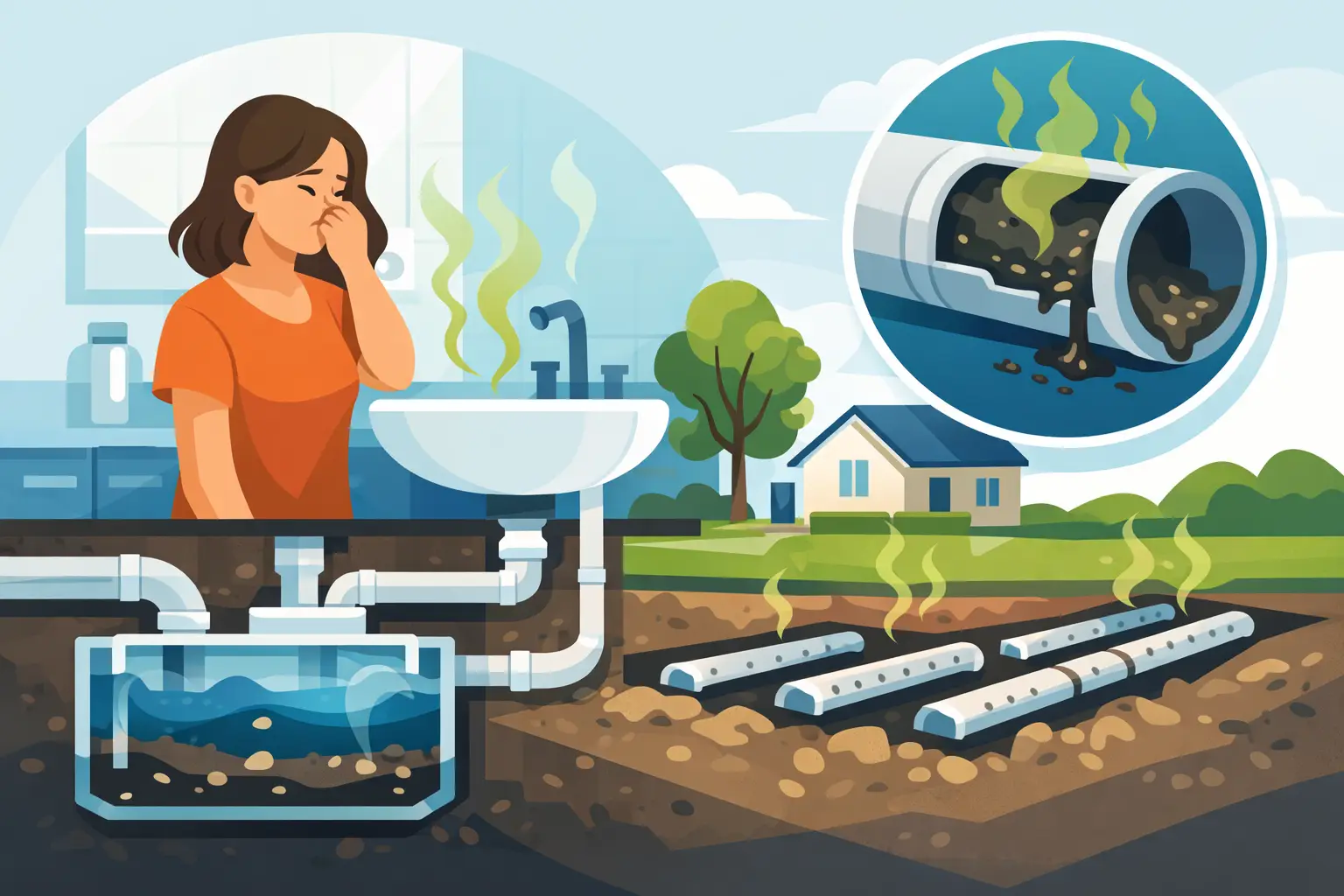
Your septic system produces gases as wastewater breaks down in the tank. Plumbing is designed to keep those gases out of living spaces. Every sink, tub, shower, floor drain, and toilet has a trap or seal that blocks odors, while plumbing vents carry gases safely above the roofline.
When a trap dries out, a vent is blocked, a line is clogged, or the septic tank is overdue for pumping, the system can lose that protection. The odor may smell like rotten eggs, sewage, sulfur, or damp waste. The location, timing, and strength of the smell all help point to the cause.
A brief odor after a drain is used may be different from a strong, constant smell throughout the house. If the odor arrives with slow drains, gurgling toilets, wet ground near the tank, or sewage backing up into fixtures, treat it as a service issue instead of a nuisance.
Common Causes of Indoor Septic Odors
A dry drain trap
A plumbing trap is the curved section of pipe under a sink or inside a floor drain. It holds water, creating a barrier between your home and sewer gases. Drains that are rarely used can dry out, especially in basement bathrooms, utility rooms, guest bathrooms, garages, and seasonal properties.
This is one of the easier causes to check. Slowly pour a few cups of water into the unused drain. For floor drains that dry out repeatedly, a small amount of mineral oil added after the water can slow evaporation. If the odor disappears, the trap was likely the problem.
Keep in mind that a dry trap is not always the whole story. If several drains smell at once or the odor returns quickly, there may be an issue farther down the line.
A septic tank that needs pumping
A septic tank is not designed to hold waste forever. Solids settle in the tank, while liquid wastewater moves to the next stage of the system. As sludge and scum build up, they reduce the tank’s working space and can interfere with normal flow.
An overdue tank may cause odors around plumbing fixtures, slow drainage, gurgling, or backups. The schedule depends on household size, water use, tank size, garbage disposal use, and what enters the system. Many homes need pumping every three to five years, but there is no one schedule that fits every property.
Pumping should be based on the tank’s actual condition, not only the calendar. A professional inspection during service can show whether solids are building up faster than expected and whether other issues need attention.
A partial clog or blocked sewer line
A clog does not have to stop a drain completely to create an odor problem. Grease, wipes, paper products, roots, scale buildup, and damaged pipe can restrict flow in the building sewer line. Wastewater then moves slowly, gases linger in the line, and pressure can push odors back through nearby fixtures.
Signs of a line restriction often include drains that empty slowly, toilets that bubble when a sink or washing machine drains, or odors that worsen after heavy water use. A plunger may help with a small fixture-level clog, but it will not clear roots, grease buildup, or a blockage in the main line.
Professional line rodding or jetting can remove many obstructions without unnecessary digging. If the line is damaged, collapsed, or separated, camera inspection may be needed to identify the repair before work starts.
A blocked or damaged plumbing vent
Your plumbing vent is easy to overlook because it exits through the roof. Its job is to balance pressure in the drain system and direct gases outside. Leaves, bird nests, ice, debris, or damage can interfere with that airflow.
When a vent is blocked, draining water can pull water out of a trap or force gases toward indoor fixtures. You may hear gurgling from a toilet or sink, particularly when another fixture is draining. Vent work often requires safe roof access, so this is best left to a qualified plumbing professional.
A leaking seal, cracked pipe, or failed toilet wax ring
Not every indoor sewer odor starts in the septic tank. A loose toilet, failed wax ring, cracked drain pipe, or poor connection can let gases escape directly into a room. The smell may be strongest near the base of a toilet, under a sink, behind a wall, or near an unfinished basement ceiling.
A toilet that rocks when you sit on it should not be ignored. Movement can damage the wax seal beneath it and allow both odor and moisture to escape. A small leak may not be obvious right away, but it can lead to floor damage if left alone.
Trouble in the drain field or septic system
If the septic tank is full, the outlet is restricted, or the drain field is saturated or failing, wastewater may not leave the system properly. This can cause slow drains and odors indoors, especially during rainy weather or periods of high water use.
Watch for wet or unusually green patches over the drain field, standing water, sewage odors outdoors, or backups in the lowest drains of the house. These are not do-it-yourself warning signs. Continued water use can make a backup worse and may damage the system further.
What to Do When You Notice the Smell
Start by narrowing down where and when the odor occurs. Run water into drains that are rarely used. Check whether toilets are loose, whether several fixtures drain slowly, and whether the smell gets worse after laundry, showers, or dishwasher use.
Avoid pouring harsh chemical drain cleaners into septic plumbing. They may damage older pipes, do little against a main-line blockage, and can disrupt the bacteria your septic tank needs to function. Do not use septic additives as a substitute for pumping or repairs either. A healthy system needs regular maintenance and sensible water use, not a bottle of quick-fix chemicals.
If you have a known pumping history, check when the tank was last serviced. If you do not know, schedule an inspection and pumping assessment rather than waiting for a backup. It is far easier to service a tank under normal conditions than to clean up sewage from a home.
When an Indoor Drain Smell Is an Emergency
Call for prompt service if you have sewage coming up through a tub, shower, floor drain, or toilet. The same goes for multiple drains that stop working, strong odors paired with wet ground around the septic area, or wastewater appearing indoors after you run the washing machine or flush a toilet.
Until help arrives, reduce water use. Do not run laundry, take long showers, operate the dishwasher, or keep flushing to test the problem. Extra water can force more wastewater back into the house.
For homes and businesses across East Central Illinois and West Central Indiana, Danville Septic can handle pumping, line cleaning, clog removal, and fast-response troubleshooting with the equipment needed to find the real problem and get the job done right the first time.
How to Help Prevent Septic Odors From Returning
The best prevention is routine service before solids build up and lines become restricted. Spread out heavy water use when possible, repair running toilets and leaking faucets, and keep wipes, grease, diapers, paper towels, feminine products, and harsh chemicals out of drains.
If you own a rental, seasonal home, restaurant, or commercial property, regular service matters even more. An unused floor drain can dry out, while a busy kitchen can build grease in lines long before a complete blockage occurs. The right maintenance schedule depends on how the property is used.
An indoor septic smell is your plumbing system asking for attention. Address it while it is still an odor, and you may avoid the disruption of a backup, damaged floors, or a larger repair later.
Leave a Reply