A septic system rarely gives much warning before a small maintenance problem becomes a wet yard, a slow drain, or sewage backing up where it does not belong. The best septic maintenance schedule is not a one-size-fits-all calendar. It is a practical plan based on your tank size, household, water use, and the condition of your drain field.
For most homeowners, regular pumping every three to five years is the starting point. But a busy household with a smaller tank may need service much sooner. Waiting until there is an odor, backup, or standing water usually means the system has already been pushed too far.
What a Septic Maintenance Schedule Should Prevent
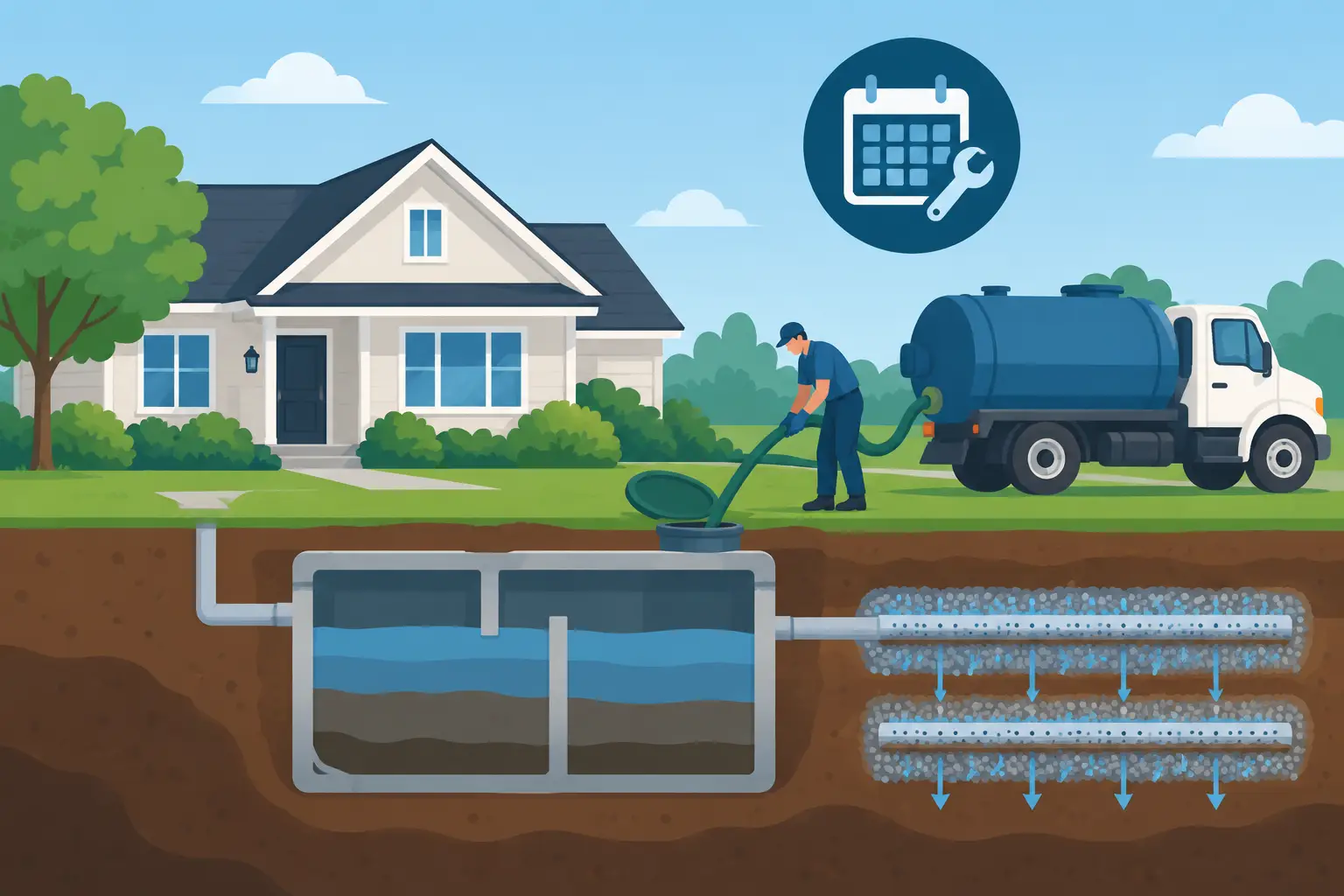
Your septic tank separates solids, oils, and wastewater. Heavy solids settle at the bottom as sludge. Lighter materials such as grease and soap residue rise to the top as scum. The liquid in between flows to the drain field, where the soil finishes treating it.
That process works well when the tank has room to do its job. When sludge and scum build up too high, solids can leave the tank and move toward the drain field. Pumping a tank costs far less than repairing or replacing a clogged drain field, which is why routine service is one of the best investments a property owner can make.
A good schedule also catches problems that pumping alone will not fix. A damaged baffle, a blocked outlet filter, roots in a line, or a failing drain field may need attention before they create a full system failure.
Best Septic Maintenance Schedule at a Glance
For a typical home with a conventional septic system, use these intervals as a working plan:
- Have the septic tank inspected and pumped every three to five years.
- Pump every two to three years if you have a small tank, a large family, frequent guests, or high daily water use.
- Check and clean an effluent filter, if your system has one, at least once a year or as recommended by the installer.
- Walk the drain field seasonally and after long wet periods to look for soft ground, sewage odors, unusually green grass, or surface water.
- Schedule line cleaning or rodding when recurring slow drains point to a buildup or blockage in the line.
These are planning guidelines, not a substitute for an on-site assessment. A four-person household using a 1,000-gallon tank has very different needs than a two-person household with a 1,500-gallon tank. Garbage disposal use, laundry habits, and water-saving fixtures also affect the schedule.
How Often Should Your Septic Tank Be Pumped?
The three-to-five-year rule works for many homes, but the right interval depends on how quickly solids accumulate. Tank size is one factor. A larger tank gives solids more time to settle and provides more storage before pumping is needed. Household size is another. More people means more toilet use, showers, laundry, and wastewater moving through the system.
A home with one or two residents may safely stay closer to the five-year end of the range if water use is modest and the system is operating normally. A family of five or six, especially in a home with an older or smaller tank, should not assume five years is safe. A two- or three-year schedule is often the smarter choice.
Garbage disposals deserve special attention. They send ground food waste into the tank, increasing the amount of solids that need to be pumped. If your household uses a disposal regularly, shorten the pumping interval. The same goes for homes with frequent visitors, rental properties, or households that do multiple loads of laundry every day.
The most reliable way to set future appointments is to have the tank checked at pumping. A qualified technician can see how much sludge and scum has accumulated and recommend an interval based on actual conditions, not guesswork.
Monthly Habits That Protect the Tank and Drain Field
You do not need to inspect your tank every month. You do need to avoid habits that overload it or send the wrong materials into it.
Spread laundry through the week instead of doing many loads in one day. A sudden rush of water can move wastewater through the tank too quickly and place extra stress on the drain field. Fix running toilets and dripping faucets promptly. A toilet that runs all day can add hundreds of gallons of unnecessary water to the system.
Keep grease, cooking oil, coffee grounds, wipes, feminine products, paper towels, dental floss, cat litter, and chemicals out of drains and toilets. Even products labeled “flushable” can create trouble in septic plumbing. Grease belongs in the trash after it cools, not down the kitchen sink.
Use normal amounts of household cleaners. You do not need to avoid every cleaning product, but pouring concentrated bleach, solvents, paint, medications, or harsh chemicals down the drain can interfere with the natural treatment process and contaminate the system. If you operate a restaurant or commercial kitchen, grease trap pumping and washouts should be handled on a separate, regular schedule to prevent costly backups and shutdowns.
Seasonal Checks for Illinois and Indiana Properties
Weather matters in East Central Illinois and West Central Indiana. Heavy spring rain, saturated ground, freezing temperatures, and rapid snowmelt can expose septic problems that stayed hidden during dry weather.
In spring, look over the drain field after wet conditions. Standing water, muddy ground, sewage smells, or bright green strips of grass may signal that wastewater is not moving through the soil correctly. Do not drive, park, place equipment, or stack materials over the tank or drain field. Heavy weight can crush pipes, compact the soil, and reduce the field’s ability to absorb wastewater.
Before winter, make sure tank lids and risers are secure and accessible. Mark the location of the tank and drain field if it is not already documented. This helps prevent accidental damage during snow removal, landscaping, fencing, or future construction work.
If your property has mature trees near septic lines, watch for recurring slow drains or backups. Roots naturally seek moisture and can enter damaged or aging pipes. Line jetting or rodding may clear a blockage, but repeated root issues may point to a pipe that needs repair.
Warning Signs That Mean Do Not Wait for Your Regular Date
A maintenance schedule is meant to prevent emergencies, but some symptoms call for service now. Slow drains throughout the home, toilets that gurgle, sewage odors indoors or outside, water backing up into tubs or floor drains, and wet areas over the drain field all deserve prompt attention.
One slow sink may be a local clog. Several slow fixtures at once usually suggest a larger plumbing or septic issue. Do not keep adding drain cleaner or flushing more water in hopes that the problem will clear itself. That can make a backup worse and delay the right repair.
If the tank is full, pumping may restore normal operation. If the tank level is unusually high or wastewater is backing up despite recent pumping, the outlet line, pump system, or drain field may need to be evaluated. The right response depends on the cause, which is why experienced troubleshooting matters.
Keep Records and Build a Schedule You Can Follow
Keep a simple record of every pumping, inspection, repair, filter cleaning, and drain field concern. Write down the service date, tank size if known, what was found, and the recommended next service date. For landlords and commercial property managers, this record is especially useful when occupancy changes or a tenant reports a drainage issue.
Set a reminder well before the next recommended pumping date. It is easier to schedule preventive work at a convenient time than to make an emergency call after a backup. If you do not know your tank size, last pumping date, or drain field location, start with an inspection rather than waiting for a problem.
Danville Septic helps homeowners, landlords, restaurants, and jobsite operators keep routine waste systems moving with scheduled pumping, cleaning, line service, and fast-response support when something goes wrong. A well-timed service visit can protect your property, your budget, and the people using the building.
The best schedule is the one that matches your actual use and gets followed. Put the next septic service date on the calendar now, then let regular maintenance do the quiet work of preventing a much louder problem later.
Leave a Reply