A slow drain can turn into a full backup without much warning. That is why the choice between line jetting versus line rodding matters. Both services clear blocked sewer, drain, and septic lines, but they work in different ways. The right method depends on what is inside the pipe, the condition of the line, and whether the goal is to restore flow quickly or clean the pipe more thoroughly.
For a homeowner, that may mean the difference between a cleared kitchen drain and a recurring mess a few weeks later. For a restaurant, apartment property, or commercial facility, it can mean avoiding a shutdown, sanitation issue, or expensive damage. A qualified technician should identify the cause of the blockage before choosing the equipment.
What Is Line Rodding?
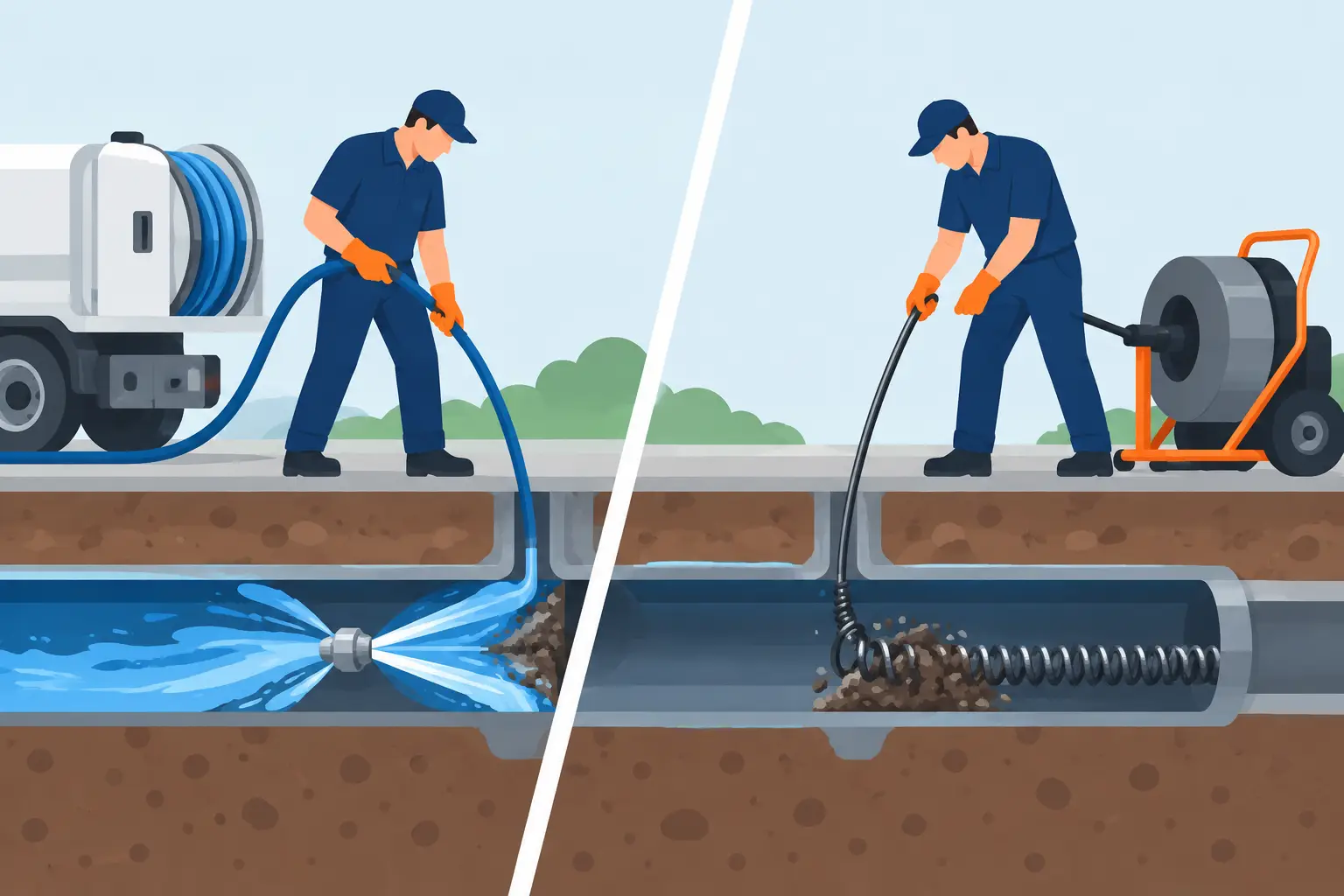
Line rodding uses a flexible steel cable, commonly called a sewer rod or drain snake, with a cutting or boring head attached to the end. The technician feeds the cable into the line and rotates it to break through an obstruction. Depending on the blockage, the head may cut roots, punch through packed debris, or pull out material that is holding wastewater back.
Rodding is often a practical first response when a line is completely stopped. It can open a path through a clog fast, allowing water and waste to move again. It is especially useful for compact obstructions such as root masses, heavy paper buildup, foreign objects, or a localized blockage in a smaller drain line.
That does not mean rodding cleans every inch of the pipe. Think of it as creating an opening through the material. If grease, scale, sludge, or residue still coats the pipe walls, the line may remain more likely to clog again. In some situations, rodding restores service while showing that more thorough cleaning is needed next.
When Rodding Is Usually the Better Fit
Rodding can be the right choice when a technician suspects roots or a hard, concentrated blockage. It is also useful when the pipe is too damaged, collapsed, or fragile for high-pressure water until its condition can be evaluated.
For example, older clay tile sewer lines often develop root intrusion at joints. A cutting head can remove enough roots to get the line flowing. If roots return quickly, the property may need a camera inspection, repeat maintenance, or repair of the failing section rather than repeated emergency calls.
What Is Line Jetting?
Line jetting, also called hydro jetting, uses a specialized hose and high-pressure water nozzle to scour the inside of a pipe. The forward jets break up the blockage while rear-facing jets pull the hose through the line and wash debris back toward the access point. The process does more than make a small channel through a clog. It can clean grease, soap residue, sediment, sludge, and other buildup from the pipe walls.
Line jetting is a strong choice for lines that keep slowing down because of accumulated material. Kitchen and restaurant drains are common examples. Grease does not always form one solid plug. It can coat the inside of the pipe, catch food particles, and gradually narrow the opening until drainage becomes a regular problem. Rodding may punch through that buildup, but jetting is generally better at washing it away.
Jetting can also be effective for municipal, commercial, industrial, and larger property drain lines where sediment and debris have collected over time. The correct water pressure and nozzle must be matched to the pipe size and condition. More pressure is not automatically better. Experienced operators adjust the equipment to clean effectively without creating additional risk for the line.
Line Jetting Versus Line Rodding: The Main Difference
The simplest difference is this: rodding mechanically breaks through a blockage, while jetting uses water pressure to flush and clean the line. Both methods can solve urgent drainage problems, but they are not interchangeable.
If the immediate issue is a dense root ball or a hard obstruction, rodding may be the quickest way to regain flow. If the problem is grease-coated pipes, recurring sludge, or widespread buildup, jetting often provides a more complete cleaning. A technician may even use both methods on the same job. Rodding can open a severe blockage first, then jetting can remove the remaining buildup that caused the restriction.
The condition of the pipe is a major factor. Damaged, cracked, offset, or deteriorated lines need careful handling. Before high-pressure cleaning, a contractor may recommend inspecting the line or starting with a more controlled approach. If a pipe has collapsed or has major structural damage, neither jetting nor rodding is a permanent fix. The blockage will keep coming back until the damaged section is repaired or replaced.
Choosing the Right Service for Common Problems
A toilet backup affecting the whole house can point to a main sewer line obstruction. If tree roots are common on the property, rodding may be the first tool used to cut through the roots and determine how badly the line is affected. If the line is open but has years of scale and debris inside, jetting may be recommended to help prevent another backup.
Slow kitchen drains, recurring floor drain odors, and frequent grease-related clogs are often good candidates for jetting. Restaurants especially benefit from scheduled grease trap service and line cleaning. Pumping the trap is necessary, but the connected drain lines can still collect grease and food waste. Cleaning both helps protect the kitchen from disruptive backups during busy service hours.
For rental properties, repeated calls for the same drain should not be treated as separate, unrelated clogs. A recurring problem may indicate a shared line with buildup, wipes, roots, or pipe damage. Clearing the line correctly the first time can reduce tenant disruption and prevent water damage to floors, walls, and finished spaces.
Construction sites and commercial facilities may have a different mix of material in their lines, including dirt, sediment, concrete slurry, or jobsite debris. These situations require the right equipment, trained operators, and a clear plan for handling the removed waste. A one-call contractor with vacuum truck, jetting, rodding, and hauling capability can often address the blockage and the cleanup without sending customers to multiple vendors.
Why Repeat Clogs Need More Than a Quick Fix
A drain that backs up once may have had a simple obstruction. A drain that backs up repeatedly is telling you something about the line. Common causes include grease accumulation, root intrusion, flushing items that do not belong in the system, poor pipe slope, a damaged pipe, or an overloaded septic system.
Avoid treating repeated backups with store-bought chemicals. Many chemical drain cleaners do little against serious main-line blockages, and harsh products can create safety concerns for the people servicing the line later. They can also be hard on certain plumbing materials. When wastewater is backing up, the best move is to stop using affected fixtures and have the system assessed.
For septic customers, it also helps to separate a line clog from a full or failing septic tank. Pumping may be needed if the tank is overdue for service, but pumping alone will not remove a blockage in the house sewer line. Likewise, clearing a line will not solve a tank that is full or a drain field that is no longer accepting wastewater. Proper troubleshooting prevents paying for the wrong service.
What to Expect During Professional Service
A reliable service call begins with questions: Which fixtures are affected? Did the problem start suddenly or build over time? Has the line backed up before? Are there large trees near the sewer route? Those details help narrow down the cause before equipment enters the line.
The technician will locate the best access point, such as a cleanout, exterior access, grease trap connection, or drain opening. From there, the line can be rodded, jetted, or inspected as needed. The goal is not simply to make water disappear down the drain. The goal is to remove the obstruction, confirm flow, and explain what caused the issue so you can make a practical next decision.
Danville Septic provides line jetting and line rodding for residential, commercial, restaurant, and jobsite customers across the region. With more than 20 years of field experience, the team can match the service to the problem instead of forcing every clog into the same solution.
If your drains are slowing, odors are building, or wastewater is already backing up, act before the next flush or sink load makes the damage worse. A prompt inspection and the right cleaning method can keep a manageable line problem from becoming an emergency inside your property.
Leave a Reply