A septic problem rarely starts as an emergency. A tank gradually fills, a filter clogs, grease builds up, or a drain line starts moving slower than usual. Septic service contracts give property owners a practical way to handle those issues before they turn into a backup in the yard, a closed restroom, or a costly repair call.
For a homeowner, a service contract can mean knowing the tank will be pumped on time without having to remember the last visit. For a restaurant, landlord, or facility manager, it can mean fewer disruptions, cleaner operations, and one dependable contractor to call when something needs attention fast.
What septic service contracts should cover
A good service contract is not just a recurring invoice. It should clearly explain what work is scheduled, how often the work is performed, what is included in the price, and what happens if the technician finds a problem during service.
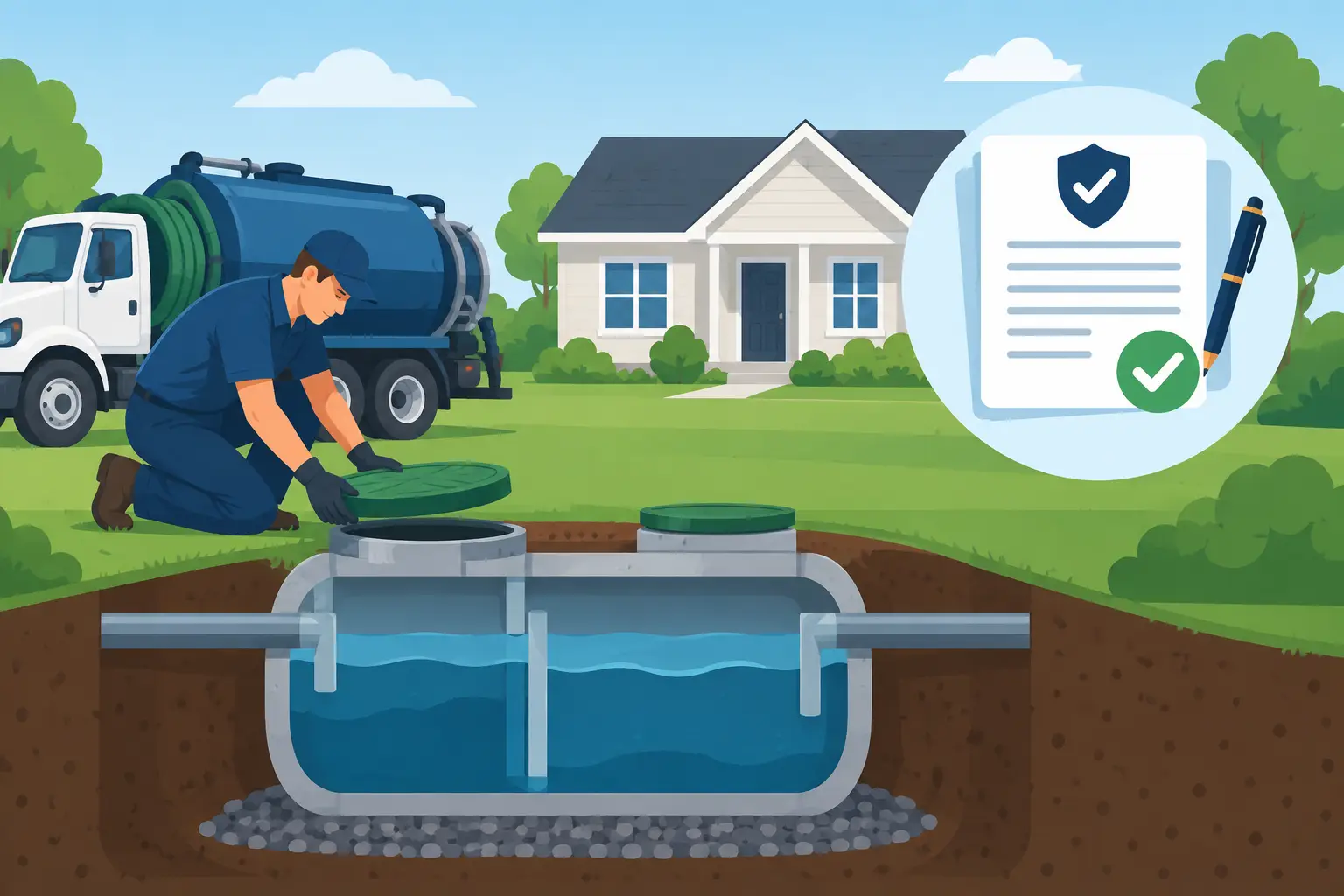
For a residential septic system, the core service is typically scheduled tank pumping and cleaning. The technician should check the tank condition, look for obvious inlet or outlet issues, and let the owner know if filters, baffles, risers, or lids need attention. The right pumping interval depends on tank size, household size, water use, and whether the home has a garbage disposal. Many households need service every three to five years, but a busy home with a smaller tank may need it sooner.
Commercial contracts need a more detailed scope. A restaurant grease trap may require pumping on a regular monthly, quarterly, or customized schedule based on the volume of food service and grease produced. Commercial septic tanks, lift stations, floor drains, and wastewater systems may also need line jetting, washouts, or vac truck service. The contract should match how the property actually operates, not rely on a one-size-fits-all schedule.
A clear agreement should address these practical details:
- The equipment or tanks covered by the agreement
- The planned pumping, cleaning, inspection, or washout frequency
- Disposal and hauling procedures for collected waste
- How service findings and recommended repairs are documented
- Emergency-response availability and any after-hours rates
- Work that is outside the standard agreement, such as major repairs, excavation, or damaged line replacement
The goal is simple: everyone knows what is scheduled, what is included, and who to call when conditions change.
Why scheduled service saves money
Waiting until a septic system backs up is usually the most expensive way to manage it. Once wastewater reaches a basement drain, restroom floor, kitchen area, or yard, the job may involve more than pumping a tank. There may be cleanup, line clearing, damaged landscaping, lost business time, or a repair to the system itself.
Scheduled maintenance helps prevent those situations by removing accumulated solids before they crowd the tank and move toward the outlet. It also gives an experienced technician a chance to spot warning signs early. A damaged baffle, heavy grease buildup, slow line, or overfull tank is easier to address before it creates a full shutdown.
For food-service businesses, the cost of neglected grease service can show up quickly. Grease does not disappear when it goes down the drain. It cools, thickens, and collects in traps and lines. That can lead to odors, slow drains, messy backups, sanitation concerns, and disruption during a busy shift. Regular grease trap pumping and washouts are operating expenses that help protect the much larger expense of an emergency closure or plumbing failure.
There is still a trade-off. A contract is not a guarantee that no issue will ever happen. Tree roots, broken pipes, excessive water use, improper materials flushed into the system, and aging equipment can cause problems between scheduled visits. What a contract does provide is a routine, a service record, and a known partner who already understands the property when fast troubleshooting is needed.
Choosing the right service frequency
The best service interval depends on use, not just the calendar. A lightly used rural home may have very different needs than a rental house with frequent turnover. A small cafe and a high-volume restaurant may both have grease traps, but their pumping schedules should not look the same.
Start with the system’s capacity and what goes into it. Household size, water use, garbage disposal use, laundry volume, and the age of the tank all matter for residential septic systems. A property with several tenants or seasonal gatherings may need a shorter interval than the average single-family home.
For commercial properties, consider peak traffic, kitchen volume, operating hours, and the type of waste being handled. A restaurant that cooks with fryers, sauces, and heavy fats will produce more grease than an office break room. Industrial and jobsite customers may need specialized liquid-waste hauling or vac truck support based on the material, storage capacity, and site conditions.
A capable contractor should be willing to adjust the schedule after seeing the system in use. If the tank is consistently far from full at service time, the interval may be longer than necessary. If it is close to overflowing, the schedule needs to tighten up. That is why accurate service records matter. They replace guesswork with a maintenance plan based on the property.
What to ask before signing a contract
Before agreeing to recurring service, ask whether the provider performs the work with its own equipment and whether it can handle related problems without sending you through several vendors. Pumping is essential, but it is helpful to have access to line jetting, rodding, clog removal, grease trap cleaning, vac truck work, and hauling when the job calls for it.
Ask how the company handles emergency calls. A contract customer may benefit from a familiar service history and faster coordination, but emergency availability, response times, and after-hours charges should be discussed upfront. No contractor can promise that every emergency will have the same arrival time, especially during severe weather or a major local event. They should, however, be straightforward about how dispatch works and what support is available.
It is also wise to ask how waste is hauled and disposed of. Commercial, restaurant, and industrial customers have additional compliance concerns, particularly when liquid waste falls outside normal household septic pumping. Contractors should have the equipment, permits, and disposal procedures appropriate to the waste stream. Danville Septic’s Illinois EPA permit to haul non-hazardous liquid industrial waste is one example of the type of capability commercial customers should look for when selecting a service partner.
Finally, read the service terms for exclusions. A standard agreement may cover planned pumping and inspection but not repairs, excavation, replacement lids, broken pipes, or unusually difficult access. Clear exclusions are not a bad sign. They help avoid surprises and make it easier to approve necessary work quickly when a real issue is found.
A contract works best with good daily habits
Routine service protects the system, but property use still matters. Homeowners should avoid flushing wipes, paper towels, hygiene products, grease, chemicals, and anything labeled flushable that does not break down like toilet paper. Those materials can clog lines, interfere with the tank, and create problems that pumping alone cannot fix.
Restaurants and commercial kitchens need staff habits that support grease management. Scrape plates before washing, keep food solids out of drains, and make sure employees understand that hot water and soap do not solve a grease problem. They may move grease farther down the line, where it can harden and create a tougher blockage.
Pay attention to changes between service visits. Gurgling fixtures, slow drains throughout the building, sewage odors, wet ground near the tank or field, and unusually green patches of grass all deserve a call. Catching a small issue early is usually faster, cleaner, and less expensive than waiting for a backup.
A septic service contract should make ownership easier, not more complicated. Choose a schedule based on real use, make sure the work scope is clear, and keep a provider’s number handy for the days when routine maintenance turns into an urgent field problem. That preparation gives your property a better chance of staying clean, open, and working the way it should.
Leave a Reply